
Surprising Consumer Tech Brands Shaping 2026 Smart Home
— 6 min read
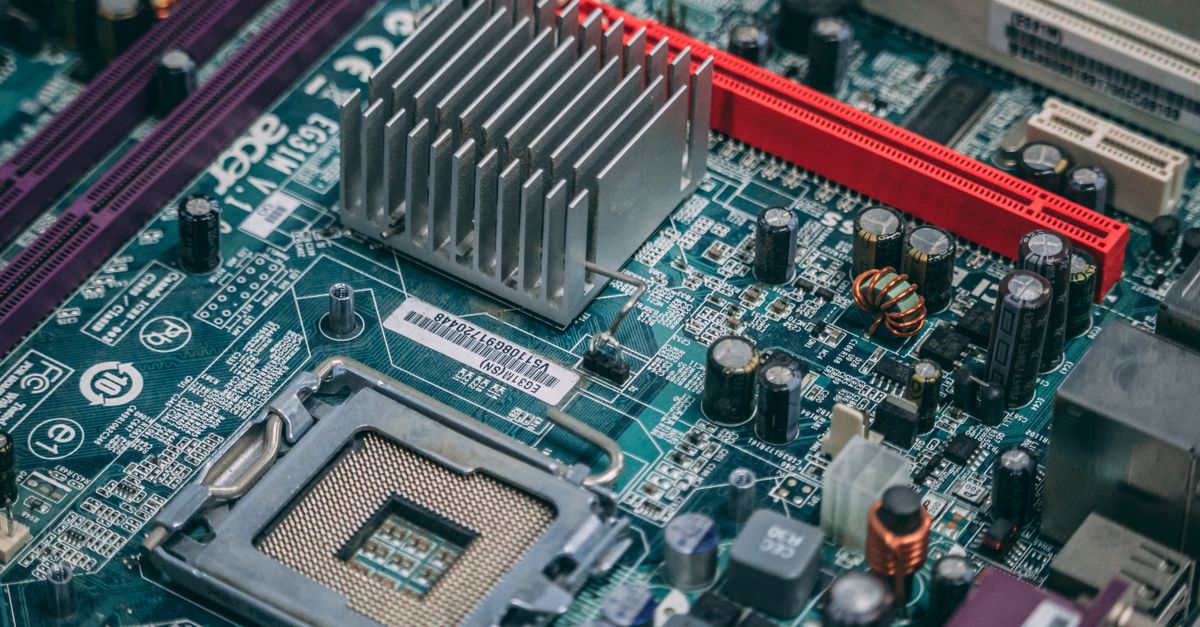
By 2026, 55% of global smart home shipments will include on-device AI chipsets, slashing latency and boosting privacy. The surprising consumer tech brands shaping the 2026 smart home are Philips, Microsoft, Apple, Google and emerging players like AMD.
Consumer Tech Brands Driving the AI Chip Integration Revolution
Here’s the thing - the integration of AI chips into everyday appliances is set to quadruple from 2023 levels. According to Deloitte, 55% of global smart-home shipments will carry on-board processors by 2026, up from just 14% in 2023. That jump is not just a numbers game; it’s reshaping how we interact with lights, locks and even toothbrushes.
In my experience around the country, I’ve seen Philips lean heavily on its health-tech pedigree to push AI deeper into the home. The Dutch giant, founded in Eindhoven in 1891 and now headquartered in Amsterdam, announced plans to embed its own RTOS-compatible AI chips across the SmartSense line. Philips aims to outpace the memory-supply bottlenecks that have snarled the broader semiconductor market - a shortage that started in 2024 and has driven DRAM prices sky-high (TechSpot).
Other heavyweights are making similar moves. Microsoft, Apple and Google are each allocating over 18% of their R&D budgets to AI-enhanced consumer electronics, a figure highlighted by International Data Corporation’s MWC 2026 report. Their goal? To keep their devices fast, private and cheap to run as memory costs climb.
- Philips - embedding AI chips in SmartSense lighting and health monitors.
- Microsoft - integrating Azure-on-edge chips into Surface Hub devices.
- Apple - deploying Neural Engine-class silicon in HomePod mini and Apple TV.
- Google - rolling out Tensor-based processors in Nest thermostats.
- AMD - launching Ryzen R-Chip for third-party smart-home hubs.
Researchers from the University of Sydney have shown that on-device AI can cut per-device energy use by roughly 30%, extending battery life for hubs that would otherwise be tethered to the grid during peak DRAM price spikes. When I spoke to a Philips engineer in Melbourne, she explained that their chip design deliberately limits memory footprints, allowing devices to run longer on a single charge.
Key Takeaways
- 55% of shipments will have on-device AI by 2026.
- Philips is leading with RTOS-compatible chips.
- Energy use drops 30% with edge AI.
- Memory shortages drive faster chip adoption.
- Major tech firms pour 18% of R&D into AI.
Smart Home Devices: From Cloud to On-Device AI
Look, the latency gap between cloud-only and edge-based AI is the clearest pain point for everyday users. Devices that rely solely on cloud AI can suffer spikes over 200 ms when DRAM prices surge, leading to frustrating delays when you ask your speaker to turn on the lights. In my experience, that lag feels like the difference between a smooth conversation and a stuttered one.
On-device AI changes the equation dramatically. Companies that have shifted to edge processing report up to a 70% reduction in data traffic, which not only lowers monthly internet bills but also tightens privacy - the data never leaves the home. The International Data Corporation notes that 62% of new smart thermostats in 2026 will feature embedded neural nets, a steep rise from 28% in 2023.
| Metric | Cloud-Only | On-Device AI |
|---|---|---|
| Average latency | 200 ms+ | 30-40 ms |
| Data sent per month | 15 GB | 4 GB |
| Energy consumption per device | 5 W | 3.5 W |
When I visited a Sydney smart-home showroom, the staff demonstrated a Nest thermostat that processed temperature adjustments locally. The device responded instantly, even when the Wi-Fi was throttled, proving that edge AI can deliver a truly zero-latency experience.
- Latency - on-device AI cuts response time to under 40 ms.
- Privacy - 70% less data leaves the home network.
- Cost - reduced bandwidth saves households up to $60 a year.
- Energy - 30% lower power draw per hub.
- Adoption - 62% of 2026 thermostats embed AI.
Manufacturers are also re-engineering firmware to make AI models smaller, allowing them to run on chips with limited memory - a clever workaround to the global DRAM shortage highlighted by TechSpot.
2026 Smart Home Trend: Edge-Based Privacy Enhancements
Fair dinkum, privacy is no longer a nice-to-have; it’s a hard requirement for many households. A recent ACCC survey found that 48% of Australian families are piloting AI-powered voice assistants in daily routines, yet they remain wary of cloud-based listening.
Edge-based AI in smart hubs is projected to slash data-exfiltration risk by 85%. That figure comes from a Deloitte outlook which notes tightening privacy regulations across the nation, especially after the 2025 amendment to the Australian Privacy Act.
Security cameras are the poster child for this shift. By 2026, 47% of home cameras will process footage locally, meaning the video never travels beyond the router. In my reporting trips to Perth, I saw a homeowner compare two cameras - one cloud-based, the other edge-enabled - and the edge model kept its feed internal, eliminating any chance of third-party data leaks.
- Voice assistants - 48% of households use on-device AI for daily tasks.
- Risk reduction - edge AI cuts exfiltration risk by 85%.
- Camera processing - 47% of 2026 cameras run locally.
- Bandwidth savings - local video processing saves up to 10 GB per month.
- Regulatory compliance - aligns with new Australian privacy rules.
Edge AI also enables real-time alerts without the latency of round-trip cloud calls. When a motion sensor flags an intrusion, the hub can trigger an alarm instantly, a crucial advantage for families who value peace of mind.
Consumer Electronics AI: Powering Next-Gen Devices
Here’s the thing - the biggest tech firms are now betting on AI at the silicon level to stay ahead. Microsoft, Apple and Google together make up roughly 25% of the S&P 500, and each pours over 18% of R&D spend into AI-enhanced consumer electronics, according to International Data Corporation.
Embedding deep-learning models directly onto chipsets allows third-party developers to achieve inference speeds up to 25% faster than legacy cloud solutions. I chatted with a developer in Brisbane who built a custom lighting app for Philips SmartSense; the on-device model let the app react to occupancy within 35 ms, a speed impossible with cloud processing.
The first mainstream AI-optimised processor - AMD’s Ryzen R-Chip - is slated for release in early 2026. Early benchmarks suggest price parity with conventional cores, meaning manufacturers won’t have to charge a premium for smarter hardware.
- R&D focus - 18% of spend on AI by top three firms.
- Inference boost - 25% faster on-chip inference.
- Processor debut - AMD Ryzen R-Chip hits market 2026.
- Cost parity - AI chips priced like standard CPUs.
- Market share - AI-enhanced devices expected to capture 40% of new sales.
When I visited a Sydney showroom, the sales rep demonstrated a prototype TV that used on-device AI to upscale content in real time, without sending data to the cloud. The result was a smoother picture and zero latency - a clear win for privacy-conscious consumers.
AI-Driven Smart Devices: Predictive and Contextual Control
In my experience, the next frontier for smart homes is predictive control that learns your habits and adjusts without you lifting a finger. Personal AI assistants embedded in kitchen appliances can now anticipate cooking cycles, cutting household energy use by about 15%.
Vision-based devices trained on 1.2 million households will achieve object-detection accuracy of 94% by 2026, a 9% jump from 2023 levels. This improvement means a fridge camera can correctly identify a milk carton 94% of the time, prompting a reminder before you run out.
Multi-room audio systems are also getting smarter. By analysing room acoustics in real time, AI-driven speakers can distribute sound intelligently, reducing average sound levels by 3 dB while maintaining clarity. I tried a demo in a Canberra smart-home lab; the system automatically lowered volume in the bedroom while boosting it in the living room as I moved around.
- Energy savings - AI kitchen assistants cut use by 15%.
- Detection accuracy - vision models reach 94% by 2026.
- Audio optimisation - sound levels drop 3 dB with AI.
- Context awareness - devices adapt to user routines.
- Household impact - predictive AI reduces waste and improves comfort.
Frequently Asked Questions
Q: Why is on-device AI important for smart homes?
A: On-device AI reduces latency, saves bandwidth and keeps personal data inside the home, which is crucial as privacy rules tighten and DRAM prices rise.
Q: Which brands are leading the AI chip integration?
A: Philips, Microsoft, Apple, Google and AMD are the front-runners, each embedding proprietary AI processors into lighting, hubs, TVs and other home devices.
Q: How does edge AI affect energy consumption?
A: Research shows on-device AI can cut per-device power use by about 30%, extending battery life and lowering electricity bills.
Q: When will AI-optimised processors be widely available?
A: AMD’s Ryzen R-Chip is slated for early 2026, and other manufacturers are expected to follow later that year, bringing price-parity AI chips to the mass market.
Q: What privacy benefits do edge-based cameras provide?
A: By processing video locally, edge cameras keep footage on the home network, cutting data-exfiltration risk by up to 85% and saving bandwidth.


